You send the same brief to three editors. You get back three videos that feel like they were built for three different brands. The colors are slightly off and pacing is inconsistent. The lower thirds don’t match. Each video is fine on its own, but together, they don’t add up to a brand.
This is what happens when you scale video production without a system enforcing brand consistency. More editors means more creative interpretation, and suddenly you’re spending more time correcting work than producing it.
In this post, we break down how to maintain brand consistency across multiple video editors, from standardizing your guidelines to centralizing feedback and production through a single platform like SoCreative.
Key takeaways
- Brand guidelines are often built for static content and they don’t always cover video-specific details like color grading, transitions, and audio levels, which is where most inconsistency starts.
- Scattered assets and fragmented feedback are the two biggest causes of brand drift across multiple editors.
- Centralizing your templates, approved assets, and revision notes in one place removes the guesswork that causes editors to interpret your brand differently.
- A quarterly video brand audit helps you catch drift early and turn corrections into permanent system updates.
- A subscription service like SoCreative lets you scale video production through a single platform where your brand standards are built into the workflow from the start.
Why consistency breaks down when multiple editors are involved
Here are some of the many reasons why brand consistency keeps breaking down even when you are working with multiple editors:
Brand guidelines weren’t built for video: Most brand guidelines are designed for static content like logo placement, color codes, and typography rules. They don’t always translate easily to video. With no specific details about color grading, transition style, and audio level, each editor makes their own call which directly leads to large variations across the board.
Asset access is fragmented: When your fonts, motion graphics templates, and approved music tracks live across different folders, drives, and inboxes, editors pull from whatever they can find. That’s how outdated logos end up in published videos.
Feedback never reaches the whole team: When revision notes are scattered across email threads and Slack messages, revisions happen in isolation as well. One editor fixes the mistake, but the next editor repeats the same mistake because they never saw the correction. There’s no shared record of what was flagged, what was changed, or why. Every editor is working from their own version of what “right” looks like, and that version drifts further from your brand with every project.
How to build a system that keeps editors aligned and your brand consistent
Fixing brand consistency across multiple editors requires removing the variables that cause drift in the first place.
Step 1: Create a video-specific brand reference
General brand guidelines don’t cut it for video. You need a reference that covers color grading profiles, typography in motion, standard transitions, audio levels, logo placement within the frame, and tone of narration. If your editors have to interpret a static PDF to make video decisions, you’ve already introduced variability.
Step 2: Centralize approved assets along with guidelines
A document telling editors what to do is different from giving them the actual tools to do it. Put your pre-built intro and outro sequences, motion graphics templates, color grading presets, approved music tracks, and font files in one place.
Step 3: Build templates
When every editor starts from the same project file, with branded lower thirds pre-loaded, the intro already built, and the color grade applied, achieving brand consistency gets easier. You stop relying on editors to remember the rules and start relying on the system to enforce them.
Step 4: Centralize feedback so corrections become system improvements
By centralizing feedback, you are able to catch the same mistake appearing across multiple deliverables and fix it at the source, instead of correcting each video individually. Over time, your feedback log becomes a reference that editors cross reference before each delivery
Step 5: Run a quarterly video brand audit
Every quarter, pull your 10 most recent videos and watch them back to back in one sitting. Score each video against your brand guide on five specific criteria: color grading, typography in motion graphics, pacing and cuts, audio levels, and CTA placement. Flag anything that has drifted from the standard and track which editors or project types are producing the most inconsistencies. Then take those findings and add them to your guideline/feedback document
How SoCreative helps maintain brand consistency
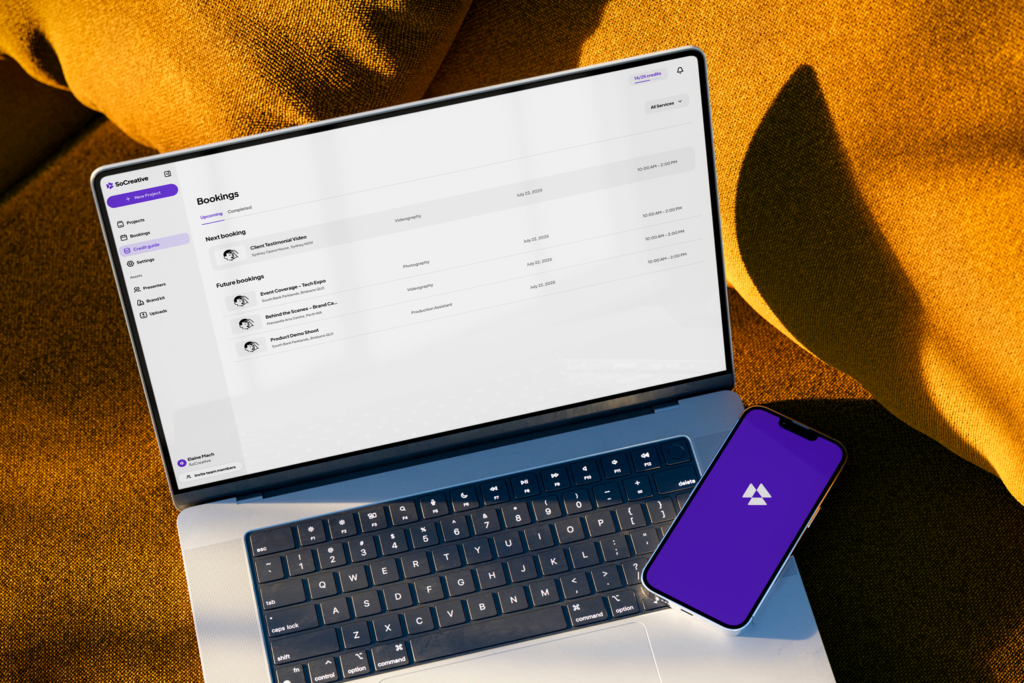
SoCreative is a subscription-based video production service that gives you a dedicated production team without the overhead of hiring one. You submit a brief, get matched with vetted editors and videographers, and receive finished videos in 24–48 hours. Everything from briefs to feedback to final delivery happens inside one platform.
That single-platform setup is exactly what makes brand consistency possible at scale. Most consistency problems come from fragmented workflows. SoCreative replaces that fragmentation with a production system where everything your editors need is already built in.
If your team is already producing video but consistency is slipping as output grows, the problem is usually the production system — not the editors. SoCreative gives you a way to produce video consistently without adding complexity to your workflow.
Quality videos delivered in days, not weeks
End-to-end video production, powered by a global network and in-house editors, all managed through one centralized platform.
FAQs
Why is brand consistency still breaking down even though we have brand guidelines?
Most brand guidelines are built for static content like logos, colors, and typography. They don’t cover video-specific decisions like color grading, transition styles, audio levels, or motion graphics. So editors fill in the gaps with their own judgment, and that’s where drift starts. The fix isn’t more documentation. It’s building video-specific references and templates that editors can actually pull from during production.
How do you maintain consistency when producing across multiple regions?
You can set up centralized templates with defined localization parameters. The global brand reference can set the floor for regional teams to adapt within those boundaries.
Can SoCreative work with our existing brand guidelines?
Yes. Every request is submitted with your references and brand assets built into the brief. The platform stores past projects so editors build familiarity with your style over time. Consistency improves with each project, not just from the first one.
How quickly can we get started with SoCreative
Once you’re onboarded, you can start submitting requests immediately. Most edits are delivered within 24-48 hours. The system is built for ongoing production and you don’t need to wait for re-scoping and custom quotes every time you create a new project.
Written by

Ritika Tiwari
Ritika Tiwari is a content strategist and writer with over 10 years of experience creating content for SaaS B2B brands. Outside of work, you’ll likely find her somewhere near the ocean.